Identity & permissions
Test authentication, sessions, and what each user role can access.



Your application keeps moving.
Your security testing should too.
Go beyond possible vulnerabilities. Explore, test, and validate real attack paths—with evidence your team can act on.
Your application keeps changing, and security tools keep flagging possible weaknesses. Each finding is a question your team still needs to answer: can it actually be exploited?
Define the application you authorize, the systems you exclude, and the limits of the engagement. Approved targets, testing windows, and request limits establish the scope before exploration begins.
Explore the system. Select a point to see how it works.



From approved scope to verified fixes.
Select a step to explore.

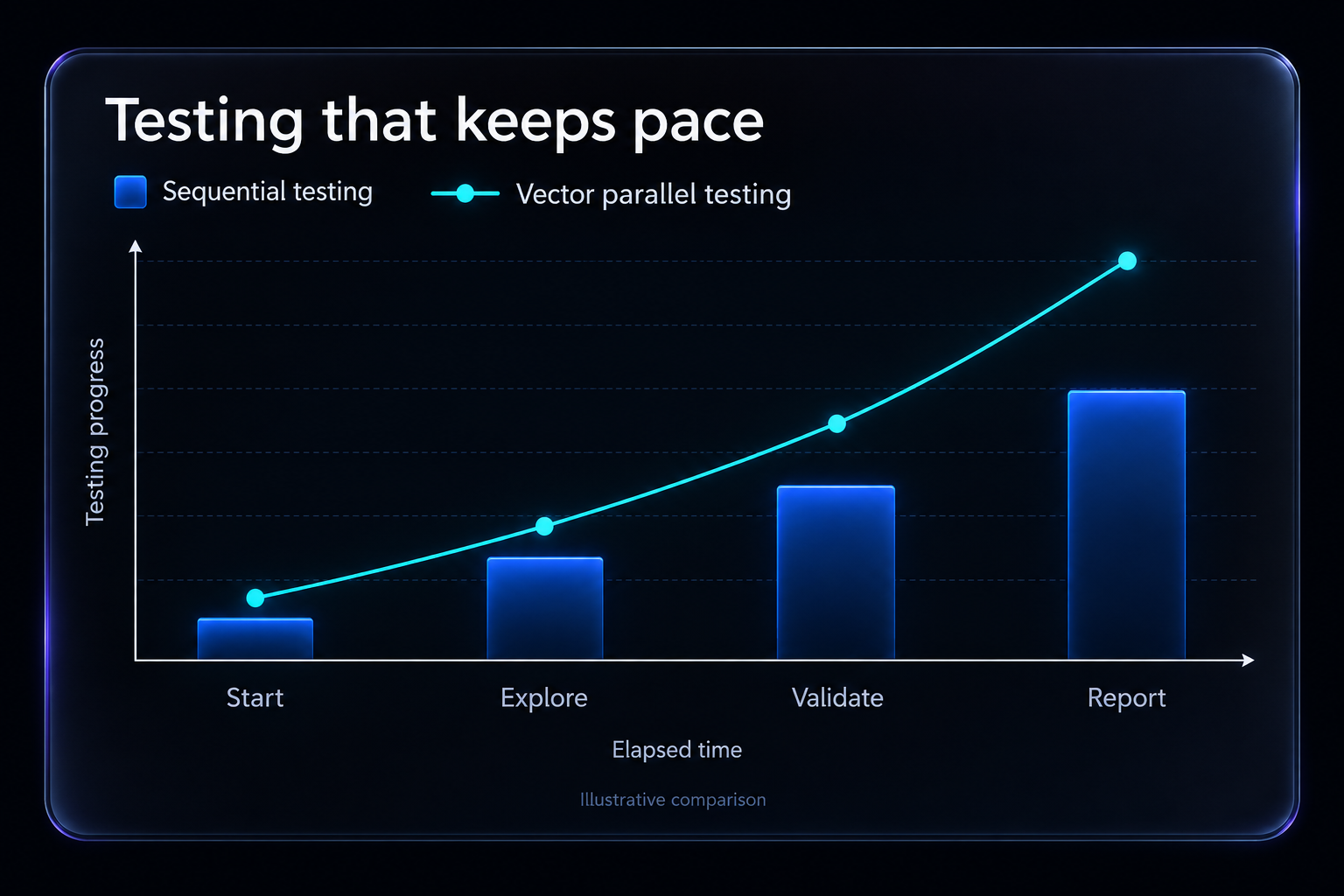
Your release cycle shouldn’t have to wait for a testing queue. Vector puts specialist agents to work together—investigating identity, data, and business logic in parallel.
Shared context. Reproducible findings. A clear next step for your team.
See how Vector worksExplore the connections between identities, data, workflows, and infrastructure—all in one view.
Test authentication, sessions, and what each user role can access.
Follow unsafe inputs to exposed records and validate the real impact.

Investigate multi-step journeys, payment assumptions, and race conditions.

Discover hidden endpoints, server-side requests, and exposed services.

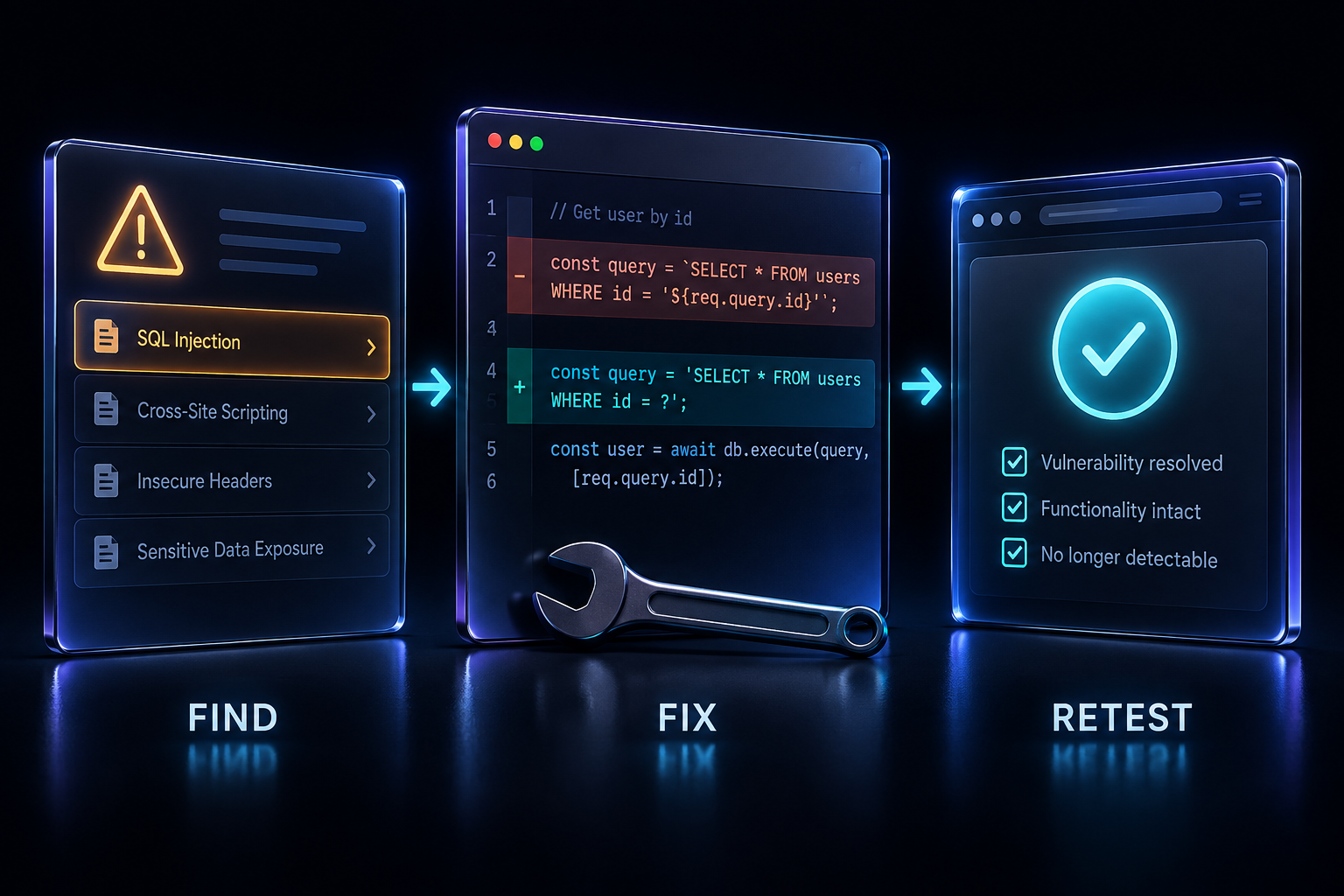
Give developers clear evidence, a fix to review, and a focused retest.
Test only what you approve. Keep everything else outside the boundary.


Investigate changes, give developers a reproducible starting point, and retest the fix.

Review validated attack paths with their evidence, context, and coverage in one engagement.

Bring formal scope, traceable testing, and clear exclusions into the client deliverable.

Define authorized targets, excluded systems, permitted techniques, and testing windows. Configure isolation to match the engagement.

Keep a record of what was checked, what remains open, and what was excluded. A quiet report should still tell a complete story.

Keep reproduction steps, captured traffic, and verification together so your team can review the result and decide what to do next.
Vector explores application behavior and attempts to validate suspected weaknesses with reproducible evidence. The aim is to give your team a finding it can investigate and fix, with context about the work performed.
The product approach supports websites, APIs, and code repositories. The appropriate targets, access requirements, and testing depth are established during scoping. Only test systems you own or are authorized to assess.
Define a rules-of-engagement document covering allowed targets, exclusions, techniques, request limits, and testing windows. Effective isolation and network controls depend on how the testing environment is configured.
No. A report describes the checks performed and the evidence collected. Vector distinguishes tested areas from open checks and exclusions; no penetration test guarantees exhaustive coverage or the absence of vulnerabilities.

See what a Vector engagement could look like for your team.