
Discovery & signals
Surface AI activity across endpoints, cloud infrastructure, and SaaS sources.


Your AI estate keeps growing.
Your visibility should too.
Discover the AI you know about—and the AI you don’t. Connect agents, owners, costs, and policies in one shared view of your enterprise.
Your inventory shows the AI your teams have registered. But a tidy list is only a view of what is known, not proof that every workload is accounted for.
Nucleus’s proposed discovery approach connects endpoint, cloud, identity, and gateway signals to surface AI workloads. Coverage depends on the sources available; unknown areas remain visible.
Explore the connections between AI discovery, accountable owners, costs, and governance.
Surface AI activity across endpoints, cloud infrastructure, and SaaS sources.
Connect each workload to an owner, business purpose, and deployment context.
Bring agent usage and business-unit context together. Keep unknown costs visible.
Route exceptions to the responsible team and preserve an inspectable review record.
Discovery, inventory, cost, governance, and intelligence. Each layer adds context to the next.

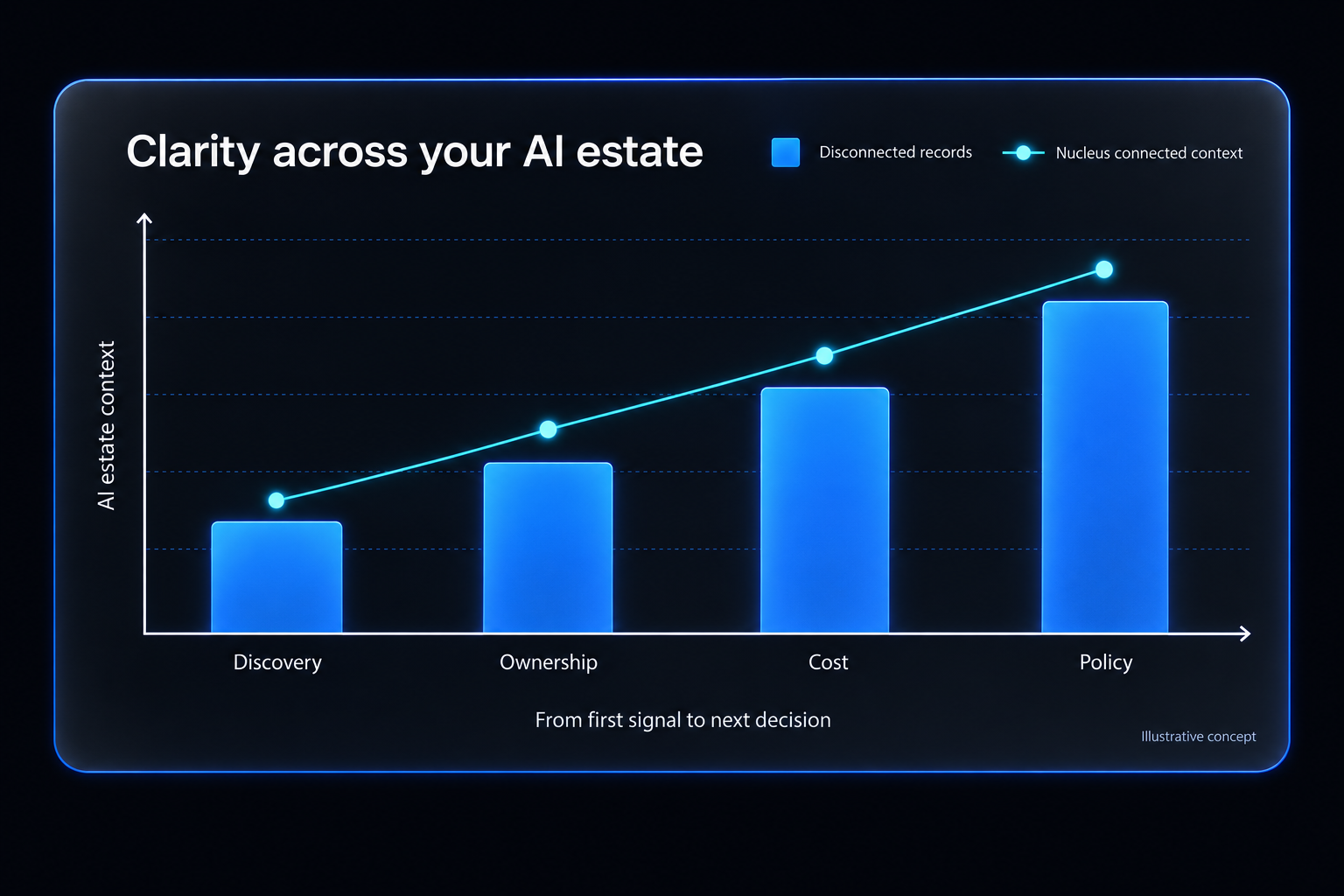
Your AI estate shouldn’t be a collection of disconnected records. Nucleus brings discovery, ownership, cost, and policy context into one control-plane vision.
Connected workloads. Accountable owners. A clear next step for each team.
See how Nucleus works
Bring workloads, ownership, costs, and review states into a connected view. Give each team the context to decide what comes next.
Four discovery blind spots shape the Nucleus approach. Each needs a different signal—not just another list of cloud resources.

A model running on a developer laptop may never make an external API call.
Proposed signal: endpoint process activity
A cloud VM can look like ordinary infrastructure while serving a model.
Proposed signal: runtime and infrastructure context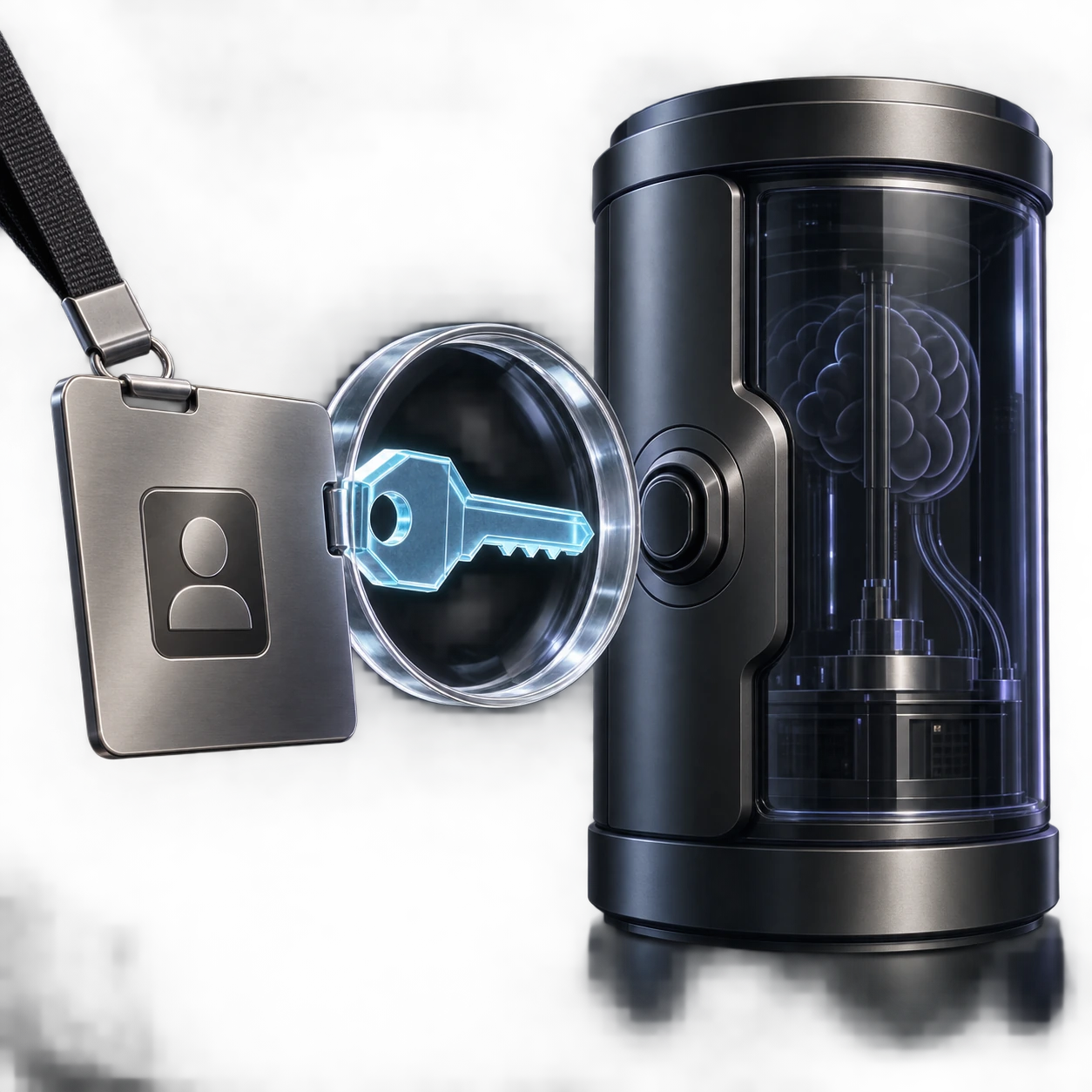
An identity with access to AI credentials may exist before its first deployment.
Proposed signal: identity and credential metadata
AI activity can happen outside the infrastructure your teams operate.
Proposed signal: identity and access records
Golden Paths are the proposed developer experience: reusable, approved deployment templates that bring the right model, gateway, logging, and review requirements into the starting point.

Understand the discovered workload, its data access, and the policy questions that need an accountable review.

Connect agent usage to owners and business units. Keep unattributed or unavailable costs visible.

Give developers approved starting points and a clear path from registration to deployment review.
The March 2026 product preview includes interfaces for inventory, shadow discovery, topology, governance, FinOps, insights, connectors, and Golden Paths, using representative mock data.
Live capabilities are being developed in phases. Discovery, integrations, cost attribution, and enforcement are part of the product roadmap. The copilot is planned for a later phase.
This page demonstrates the intended product experience. Confirm current availability, source coverage, access requirements, and pilot scope with the team.
Nucleus is the Zynetra AI control-plane concept. It brings discovery, inventory, agent-level cost attribution, governance, and insights into a shared view of enterprise AI. The product is in preview, with live capabilities on a phased roadmap.
A gateway can provide visibility into traffic routed through it. Nucleus’s proposed approach also uses cloud, endpoint, and identity signals to find workloads outside that path, then connects them to ownership, cost, and governance context.
Coverage depends on the sources connected, permissions granted, and signals available. Local models, self-hosted inference, and SaaS usage require different discovery methods. An absence of signals does not prove that no AI exists.
No. The examples on this page use illustrative records. Live connectors and policy enforcement are on a phased roadmap. A walkthrough should establish which capabilities are available for your environment.
No. Inventory, policies, approvals, and audit records can support your governance work. Your organisation still needs to establish its requirements, assess the evidence, and make its own compliance decisions.

Explore the control-plane vision and shape a deployment around your organisation.